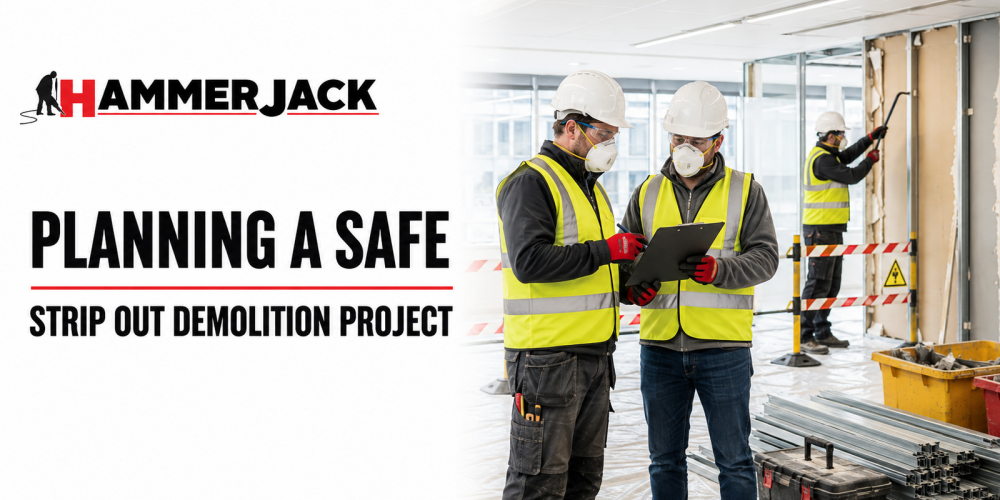
Planning a safe strip out demolition project is essential when preparing a commercial or industrial property for refurbishment, redevelopment or complete demolition. A carefully organised programme helps protect workers, building occupants and the public while ensuring the property is ready for its next phase.
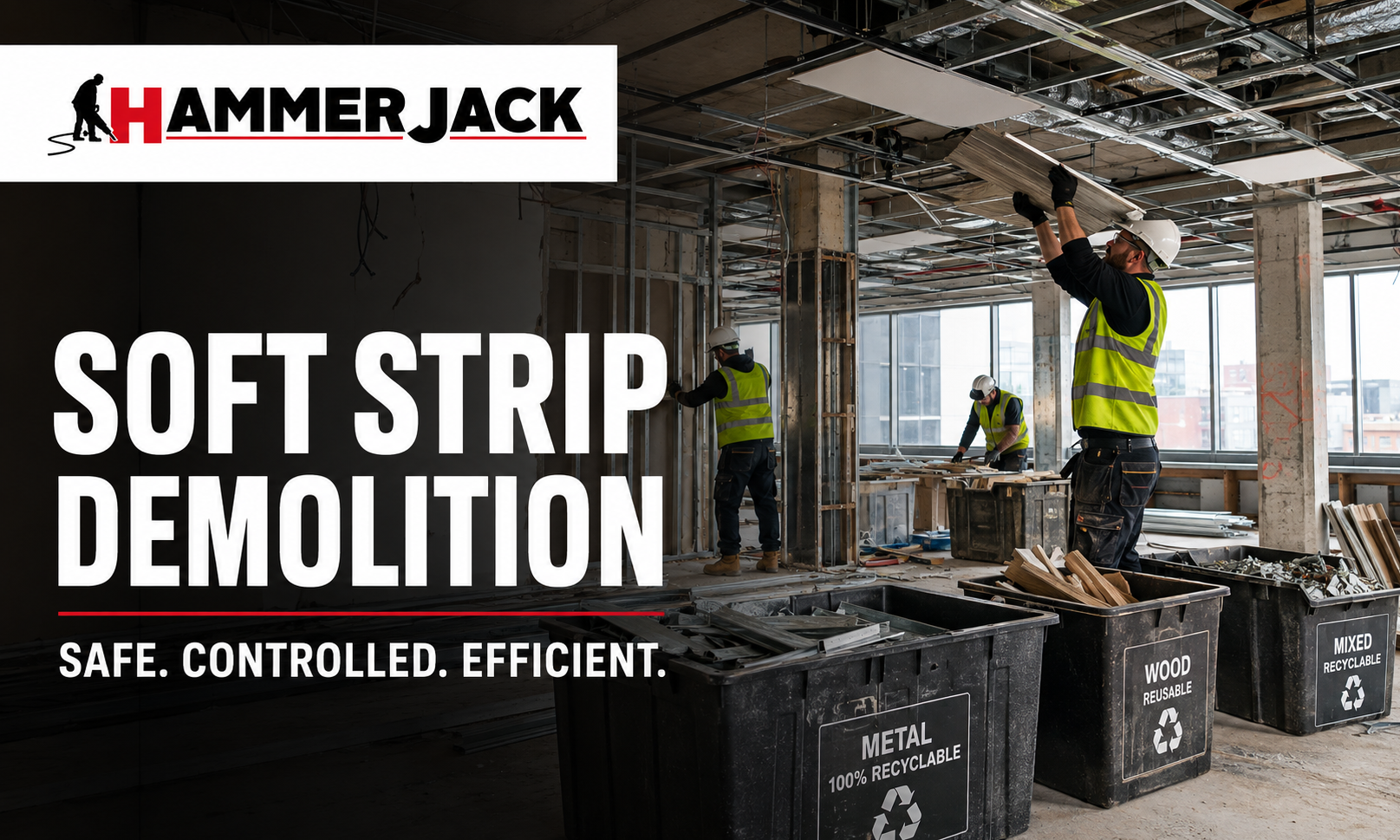
Strip out demolition involves the controlled removal of internal fixtures, fittings, finishes and non structural elements. Depending on the building, this may include partitions, ceilings, flooring, doors, sanitary fittings, kitchens, furniture and building services.
Assessing the Property and Project Requirements
Every strip out demolition project should begin with a detailed assessment. The contractor must understand the condition of the property, the intended scope of work and any elements that need to remain in place.
Access restrictions, neighbouring properties, occupied areas and available working space should also be considered. These details help the contractor determine the most suitable equipment, number of operatives and sequence of removal.
A clear scope reduces uncertainty and allows the strip out work to be coordinated with refurbishment contractors, surveyors and other specialists involved in the wider programme.
Completing the Required Surveys
Suitable surveys must be completed before materials are disturbed. Older commercial and industrial buildings may contain asbestos containing materials, lead paint or other hazardous substances.
An appropriate asbestos survey is particularly important. If asbestos is identified, it must be managed or removed by suitably trained specialists using the required procedures and control measures.
The condition of the structure should also be reviewed where necessary. Strip out work can expose damaged surfaces, hidden defects and areas requiring additional investigation. Identifying these issues early can help prevent unexpected delays later in the project.
Isolating Building Services
Commercial properties can contain electrical cables, gas supplies, plumbing systems, ventilation equipment and other mechanical services. These services must be identified and safely isolated before the strip out begins.
Clear records and physical checks help ensure operatives understand which services are no longer live and which must remain protected. Careful isolation reduces the risk of injury, flooding, fire and accidental damage to retained systems.
Where parts of the property remain occupied, temporary services may be required to support ongoing operations.
Establishing Safe Working Areas
Before removal starts, the contractor should establish secure working zones, designated access routes and suitable waste storage areas. Barriers and signs can help prevent unauthorised entry, while dust control measures can limit the spread of debris.
Noise, vehicle movements and working hours should be considered when the site is close to businesses, homes or public areas. If sections of the building remain occupied, the work may need to be completed in carefully controlled phases.
Operatives should receive a site induction and understand the agreed working methods, emergency arrangements and project responsibilities.
Planning the Removal Sequence
Materials should be removed in a logical order to maintain safe access and avoid unnecessary damage. Lightweight fixtures and fittings may be removed first, followed by partitions, ceilings, flooring and building services.
Heavy items, machinery or specialist equipment may require lifting plans and suitable plant. Close supervision helps ensure the agreed sequence is followed and any unexpected conditions are addressed promptly.
Regular communication between Hammerjack, the client and other contractors helps keep the programme organised and allows the next stage of work to begin efficiently.
Managing Waste Responsibly
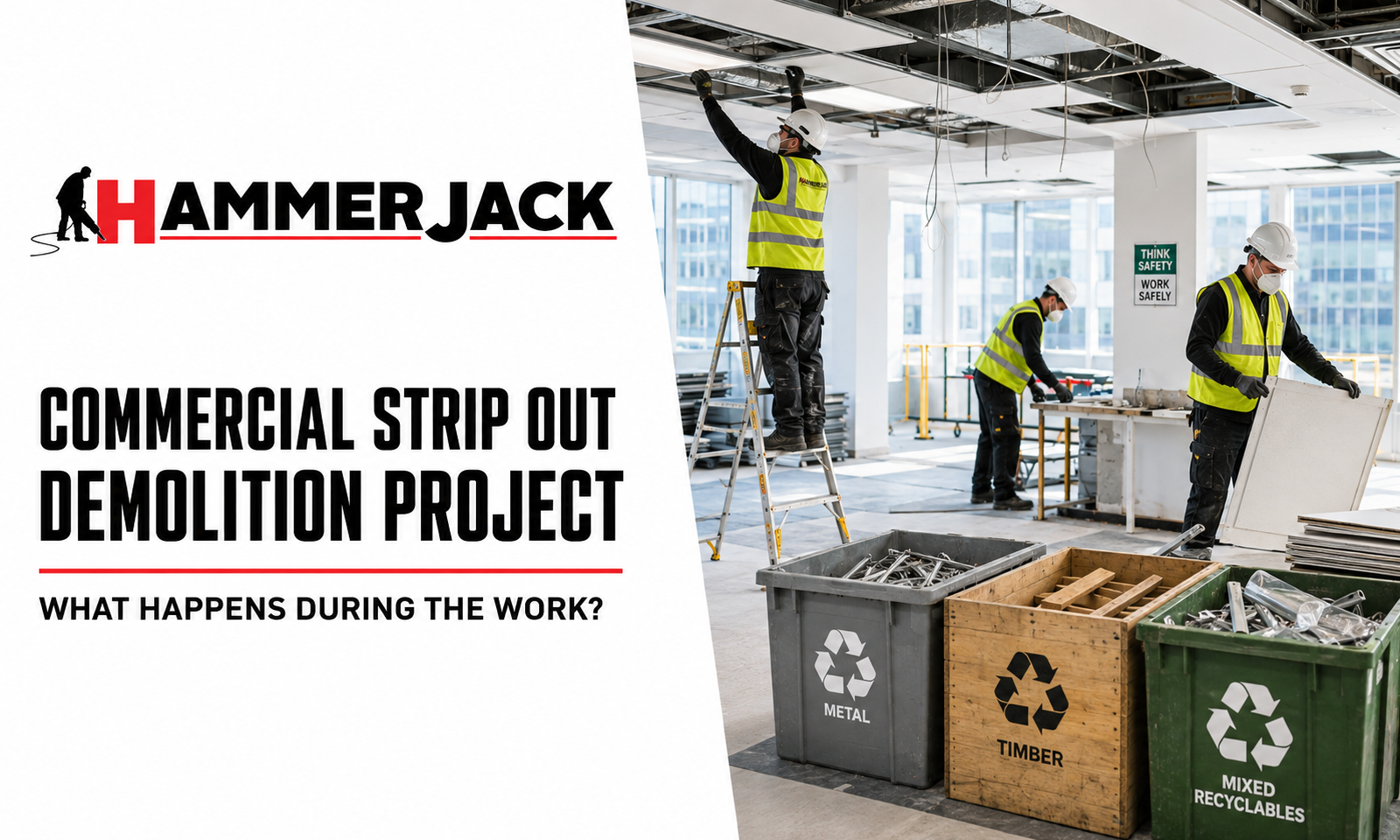
A safe strip out demolition project should include a clear waste management plan. Materials such as metals, timber, glass, plasterboard and selected fixtures may be suitable for recycling, reclamation or reuse.
Separating materials at source can reduce mixed waste and limit the amount sent to landfill. Hazardous waste must be stored separately and transferred to authorised facilities using the appropriate documentation.
Plan Your Project with Hammerjack
Hammerjack has more than 35 years of demolition industry experience. Our trained operatives provide carefully planned strip out demolition services for commercial and industrial properties across the UK.
We can complete strip out work as a dedicated service or as part of a wider programme involving demolition, dismantling, asbestos removal, reclamation or remediation.
Call Hammerjack today on 0121 461 7721 to discuss your strip out demolition requirements.