Soft strip demolition supports recycling and waste reduction by allowing materials to be carefully removed, separated and assessed before refurbishment, redevelopment or structural demolition begins. Instead of treating the entire interior of a building as mixed waste, contractors can identify materials suitable for recycling, reclamation or reuse.
This controlled approach is commonly used in offices, retail units, warehouses, factories, schools and other commercial or industrial properties. Careful planning can reduce the amount of waste sent to landfill while preparing the building safely and efficiently for its next phase.
Separating Materials at Source
One of the main environmental benefits of soft strip demolition is the ability to separate materials as they are removed. Mixed construction waste can be difficult and expensive to process because recyclable items may become contaminated by other materials.
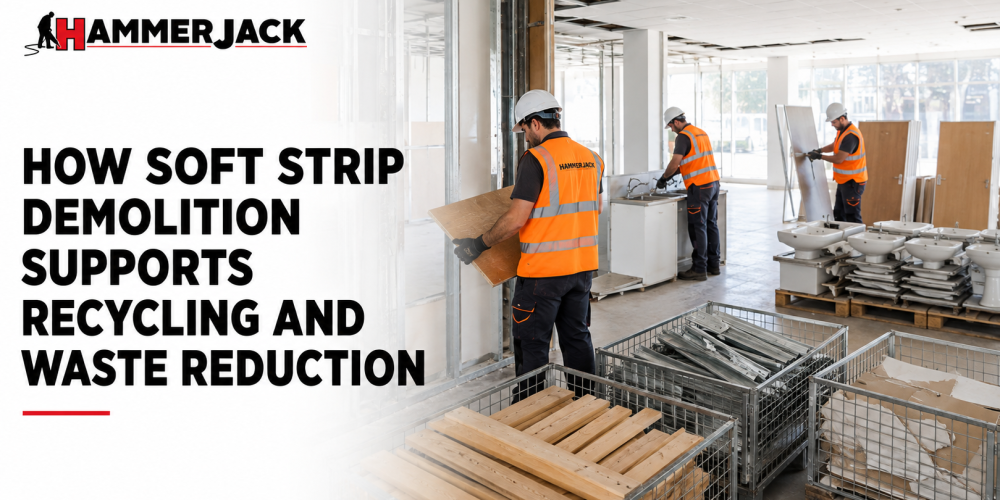
During a professional soft strip project, different materials can be placed into dedicated waste streams. These may include timber, metals, glass, plasterboard, plastics and electrical equipment. Keeping materials separate can improve recycling opportunities and make transportation to suitable facilities more efficient.
Waste separation requirements should be considered during the planning stage. This allows the contractor to organise suitable storage areas, containers and collection arrangements before work begins.
Recovering Materials for Recycling
Commercial buildings contain many materials that may be suitable for recycling. Copper cables, steel frames, aluminium fittings and other metals can often be recovered and transferred to authorised recycling facilities.
Timber, glass and plasterboard may also be recyclable, depending on their condition and whether they have been contaminated. Assessing materials during removal allows the demolition team to identify the most appropriate route for each waste stream.
Recovering recyclable materials can reduce the demand for raw resources and support a more responsible approach to construction waste. Valuable materials may also help offset some project costs, although this will depend on their quality, quantity and current market value.
Reusing Fixtures and Building Components
Not every removed item needs to become waste. Doors, sanitary fittings, lighting, furniture, shelving and other building components may be suitable for reuse or reclamation if they are removed carefully and remain in good condition.
Items can sometimes be reused within the same development or transferred to another project. Others may be accepted by specialist reclamation businesses or community organisations.
Identifying reusable materials before the strip out begins is important. A planned removal sequence can help prevent avoidable damage and give contractors enough time to arrange suitable storage or transportation.
Reducing Waste Sent to Landfill
When materials are mixed together or removed without a clear waste plan, recyclable and reusable items may be unnecessarily sent to landfill. Soft strip demolition helps reduce this risk by giving contractors greater control over how materials are handled.
Hazardous materials must always be identified and managed separately. Older buildings may contain asbestos containing materials, so an appropriate asbestos survey should be completed before work begins. If asbestos is discovered, specialist procedures and control measures must be followed.
Keeping hazardous waste separate also helps protect other materials from contamination, allowing suitable items to remain available for recycling.
Supporting Environmental Project Goals
Many UK refurbishment and redevelopment projects include environmental targets. A well planned soft strip programme can support these goals by recording the types and quantities of materials removed and how they were managed.
Waste transfer documentation and recycling records can help clients demonstrate responsible waste management. Accurate reporting may also identify opportunities to improve performance during later stages of the project.
Choose Hammerjack for Soft Strip Demolition
Hammerjack has more than 35 years of experience in the demolition industry. Our trained operatives provide professional soft strip demolition services for commercial and industrial properties across the UK.
Every project is carefully assessed to identify reusable materials, suitable recycling streams and any hazardous substances requiring specialist management. We can deliver soft strip work as a dedicated service or as part of a wider demolition, dismantling, asbestos removal, reclamation or remediation programme.
Call Hammerjack today on 0121 461 7721 to discuss your soft strip demolition requirements.